
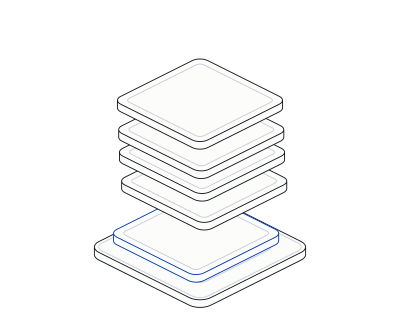
The Trust Stack

Five layers that decide whether AI helps your business or hurts it. A practical framework for SME leaders who want the benefits without inheriting the risks.

Take the readiness assessment 20 questions · 10 minutes · Free

Choose a layer to see it at work

01 Data Know what your AI is built on

A sales assistant drafts a quote using an old price list.

Put it into practice

Connect it to an approved, current source and assign someone to keep that source accurate.

Warning sign

Your team gets inconsistent answers, references old documents, or sees client data appear in someone else’s output.

Read about data
02 Security Stop confidential data leaving the building

A colleague wants AI to summarise a confidential customer contract.

Put it into practice

Use an approved business tool and check the data rules before sharing the document.

Warning sign

Staff paste confidential information into free AI tools without knowing if that data is stored, trained on, or shared.

Read about security
03 Behaviour Catch the wrong answers before customers do

AI drafts a customer reply with a convincing but invented product claim.

Put it into practice

Check the answer against your product information before anyone sends it.

Warning sign

AI-generated content is published or sent without review, or decisions are made based on outputs nobody has verified.

Read about behaviour
04 Oversight A name on the door for AI

Different teams sign up for AI tools without anyone reviewing them.

Put it into practice

Name an owner and agree a review step before introducing another tool.

Warning sign

Nobody knows who approved an AI tool, wrote the policy, or is responsible when something goes wrong.

Read about oversight
05 Evidence Keep the receipts

You pay for several AI subscriptions but can't tell which ones earn their keep.

Put it into practice

Record spend, time saved and errors so renewal decisions have evidence behind them.

Warning sign

You're paying for AI tools but have no record of what changed, what improved, or whether anyone uses them.

Read about evidence

01 · The layers

Each layer, and how it fails.

Most AI problems in a small business can be traced to a gap in one of these five places. Weakness in a lower layer undermines everything above it.

Layer 01

Data

Know what your AI is built on

More on data

AI is only as good as the data it sees. If you don't know what your AI tools are trained on, what data they have access to, or whether your own data is being used to train them, you're flying blind.

Why it matters for an SME

For an SME, this means customer records, pricing, contracts, product information, and internal documents. Unclean, biased, or leaked data leads to bad outputs and real liability.

Warning sign

Your team gets inconsistent answers, references old documents, or sees client data appear in someone else’s output.

Layer 02

Security

Stop confidential data leaving the building

More on security

Every AI tool is a data-processing machine. Before you adopt one, you need to know where your data goes, who can access it, and whether it leaves your control.

Why it matters for an SME

Irish businesses handle GDPR-regulated data. A single team member pasting client details into the wrong tool can create a breach, fine, and reputation damage.

Warning sign

Staff paste confidential information into free AI tools without knowing if that data is stored, trained on, or shared.

Layer 03

Behaviour

Catch the wrong answers before customers do

More on behaviour

AI is confident, fast, and often wrong. This layer is about the checks, prompts, and judgement that stop bad outputs reaching clients, decisions, or public content.

Why it matters for an SME

Your brand and credibility are built on accuracy. One unchecked AI hallucination in a client email, report, or invoice can cost trust that took years to build.

Warning sign

AI-generated content is published or sent without review, or decisions are made based on outputs nobody has verified.

Layer 04

Oversight

A name on the door for AI

More on oversight

Someone needs to own AI decisions. Oversight means clear roles, acceptable-use policies, and a person who is accountable when AI affects your business, customers, or staff.

Why it matters for an SME

When everyone uses AI but nobody owns it, accountability disappears. The EU AI Act also requires human oversight for many high-risk uses.

Warning sign

Nobody knows who approved an AI tool, wrote the policy, or is responsible when something goes wrong.

Layer 05

Evidence

Keep the receipts

More on evidence

You can't improve what you don't measure. Evidence means documenting what AI tools you use, what they produced, what decisions they informed, and whether they actually saved time or money.

Why it matters for an SME

Without evidence, you can't tell if AI is helping, justify the spend, or prove compliance if questioned.

Warning sign

You're paying for AI tools but have no record of what changed, what improved, or whether anyone uses them.

02 · Why it matters

Most SMEs adopt AI backwards.

They pick a tool, try a prompt and hope for results. The Trust Stack reverses that: start with what your AI is built on, secure what’s sensitive, catch the wrong answers, assign ownership and keep the receipts.

01

Foundation before tools

If you don’t know what data your AI is trained on or connected to, you can’t trust what it produces. Data is layer one for a reason.

02

Security isn’t optional

Pasting a customer contract into a public chatbot is a data breach. Layer two stops confidential information leaving the building.

03

Outputs need checking

AI gets things wrong confidently. Layer three catches hallucinations and errors before your customers or regulators do.

04

Someone owns this

Without a named person accountable for AI decisions, adoption drifts. Layer four puts one person’s name on the door.

05

Keep the receipts

When something goes wrong, you need a record of what was decided, when and by whom. Layer five is the audit trail.

AI Readiness Scorecard

See where your business sits on each layer.

Twenty questions, about ten minutes. You get a score for each layer, an overall tier and the next step that matters most.

Want help with a specific layer?

Book a free thirty-minute consultation. We’ll look at where your gaps are and what to fix first.